Launching a vehicle like the new Genesis GV90 is a massive affair. The event where Genesis hosted media to herald the new flagship SUV’s arrival included all sorts of presentations about tech, vehicle materials, and brand innovations. It can be a bit overwhelming if you don’t have your notepad ready to go. With an entirely new vehicle like this, there’s a lot to go over, and some of the details don’t make the headlines.
 Travis Langness/SlashGear
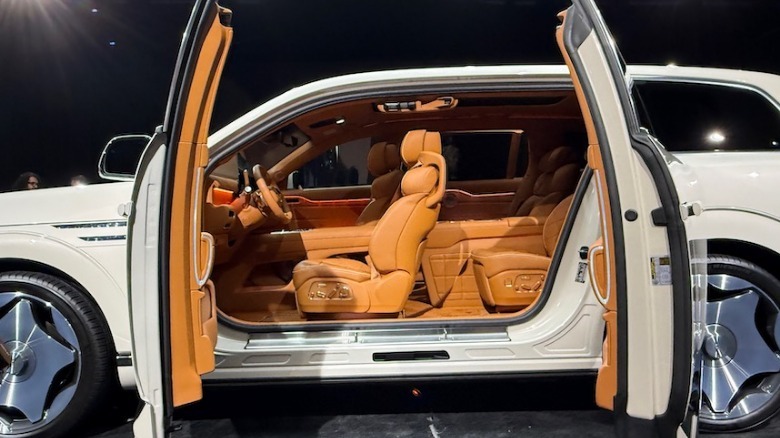
Sure, you’ve probably heard that the GV90 is an all-electric two- or three-row SUV with 657 horsepower and an estimated range of 310 miles. And by now, you’ve probably seen plenty of photos of the wide-opening coach doors (honestly, they’re pretty cool). But did you know that you can get stone door panels? Or that the cupholders are cooled and the wood used for the various panels is sourced from Italy?
 Travis Langness/SlashGear
What about the number of bearings used to operate the coach doors? Did that detail make it through the noise? (It’s over 500 ball bearings, by the way.) There are all sorts of tiny nuances on the GV90 Neolun that reveal themselves when you take a closer look, helping to signal this SUV’s elevation from standard family transport to luxury brand representative. These are some of the details that stood out to me in particular.
Details reveal themselves around every turn
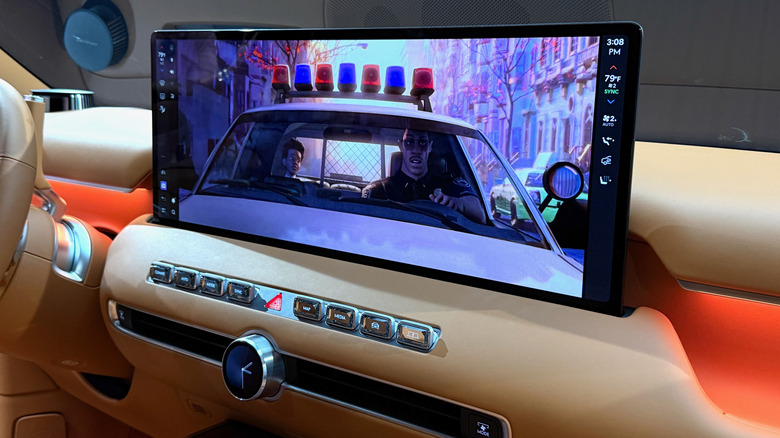
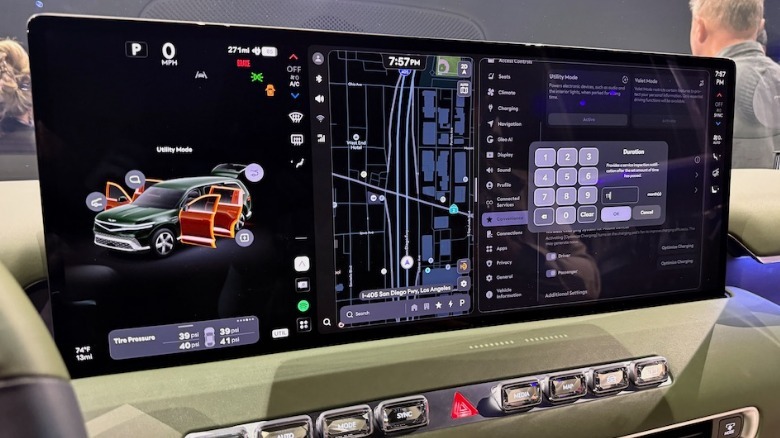
It was one of the last features I got to see working up close, but it was one of the most impressive. The GV90’s center touchscreen is like something out of a supervillain’s secret underground lair — or maybe even the Bat Cave. The OLED 23.6-inch wide screen sits low on the dash, providing an unobstructed view of the road ahead when you’re underway. There’s no driver display screen or gauges, so it’s the only screen you get.
 Travis Langness/SlashGear
Put the GV90 in park, though, and the screen can pop up out of the dash, going from a low widescreen into something that’s shaped a lot more like a television. It’s 70% more screen on display in full popped-up mode, and 90mm’s higher on the dash.
During the full day of presentations on the GV90, a Genesis representative pulled up Netflix and started streaming a Spiderverse movie — right up my alley. This is the sort of thing I imagine owners will do when they’re on long road trips and need entertainment while they’re charging the GV90. Though, with a fast charger, you may need to watch your movie in little 22-minute snippets.
All the moving pieces
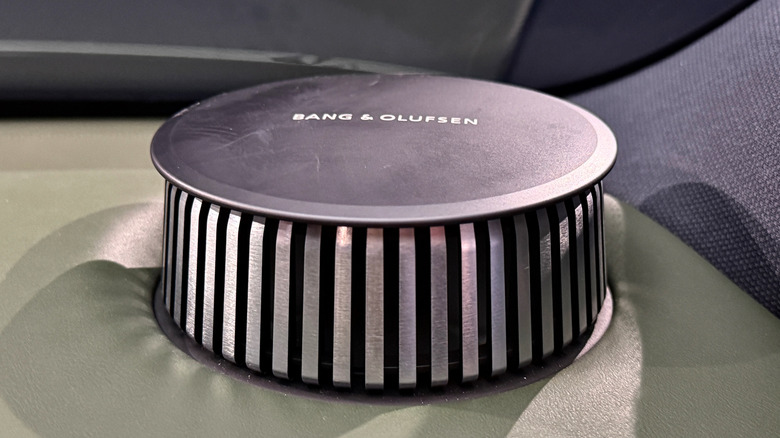
Along with the motorized movement of the screen, there are Bang & Olufsen tweeters (part of a 25-speaker sound system) mounted on the dashboard that reveal themselves when the GV90 starts up. Like a round, motorized curtain being pulled back on a stage, the tweeter covers rotate outwards to allow sound out of the speaker openings.
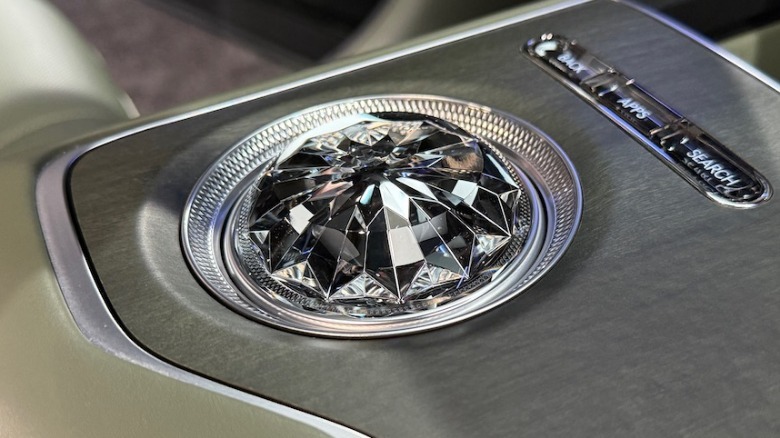
And, it wouldn’t be a high-end Genesis without the rotating center-console orb. A Crystal Sphere Controller in Genesis terminology, it rotates on start-up to a functional position.
 Travis Langness/SlashGear
The massive volume knob mounted in the center of the dashboard is one of my favorite interior pieces, not just for its usability, but also for what it does when it’s not being used to change the volume. It transforms (digitally) into a tiny (analog) clock.
 Travis Langness/SlashGear
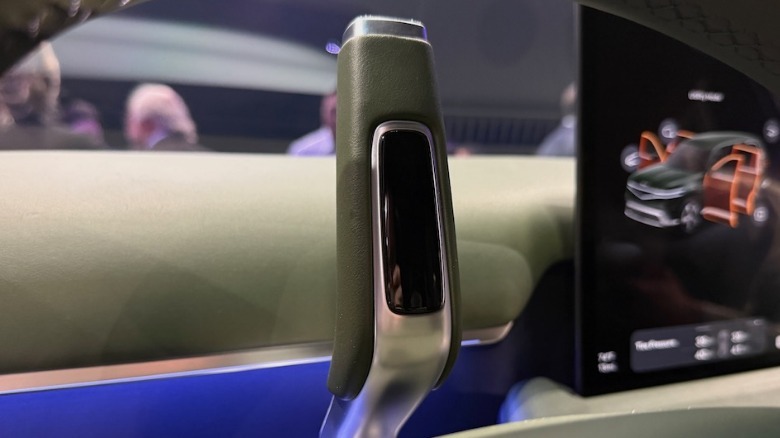
Finally, there’s the Motion Column Shifter. I can’t really think of a practical reason for this as a feature, and as such it feels a bit show-offy, but that’s a pretty reasonable offense for such a bold vehicle. The GV90 has a column shifter that sits at the 12 o’clock position, pointing straight up behind the steering wheel. Get in the GV90, get ready to go by pressing the brake pedal (no ignition button or keyhole here), and the lever moves clockwise down the steering column to the 2 o’clock position.
There’s depth in the paint, and pretty much everywhere else
There are a lot of different paint colors available for the GV90, and most of what I saw in person made all of them look pretty fabulous. There are 16 total colors available at launch, 3 of which have a glossy finish and the other 3 of which are offered in a matte finish. The glossy options are as follows: Seychelles Beige, Baena Green, Sonoran Navy, Taupo Gray, Jaipur Rose, Vela Burgundy, Como Blue, Uyuni White, Saville Silver, Makalu Gray, Vik Black, Capri Blue, and Cardiff Green. Matte finishes are Matterhorn White, Monashee Silver, and Makalu Gray.
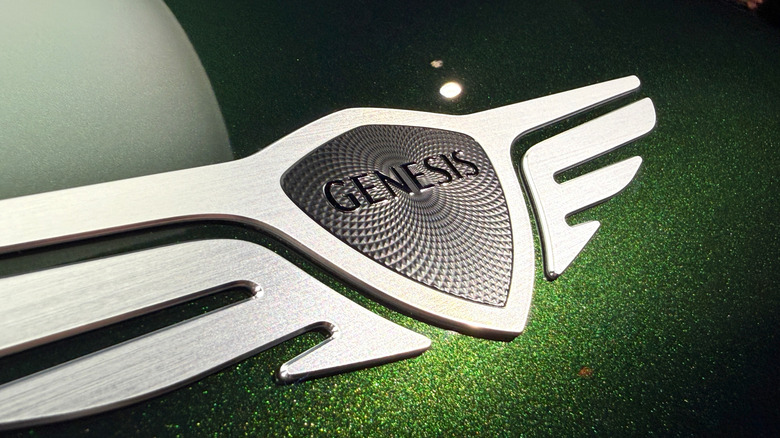
My favorite of the three launch colors was Baena Green (pictured here). It changed tones as I moved around the GV90, highlighting all sorts of different versions of the color. I’d love to see it in both exterior daylight and highlighted by rows of city street lights.
 Travis Langness/SlashGear
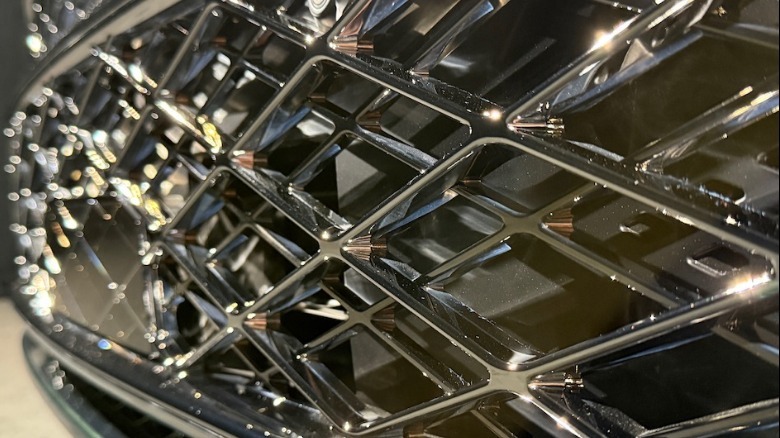
Just about every exterior element of the GV90 has physical depth to it as well. The front badge has a raised, diamond-pattern in the smallest of areas, unlikely to be noticed by anyone but an eagle-eyed owner or a particularly fastidious detailer. The lower grille has what Genesis calls a dual-layered G-matrix pattern. Essentially, it’s a grille behind the grille, making what would otherwise be a flat, lifeless surface, substance.
Yes, stone is one of the materials you can have
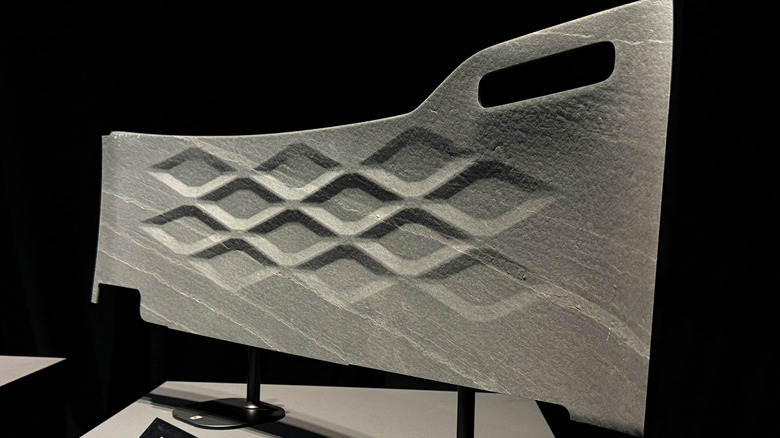
The various materials used to build the GV90 were of particular interest to me too. In the construction of the GV90, Genesis has used more aluminum than in any previous vehicle they’ve made. Up from 35% of the body panels to a whopping 75%, there’s a very high percentage of the lightweight metal.
 Travis Langness/SlashGear
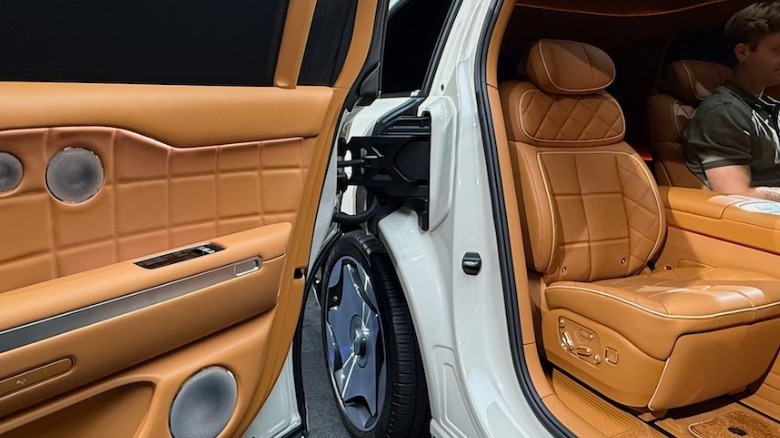
The windows and windshield are all made of acoustic glass, which is 5.0mm thick and shuts out basically any sort of conversation — even the ones being had directly outside the GV90’s windows. With a room full of chatty journalists surrounding it, I shut the GV90’s doors and could barely hear a thing.
 Travis Langness/SlashGear
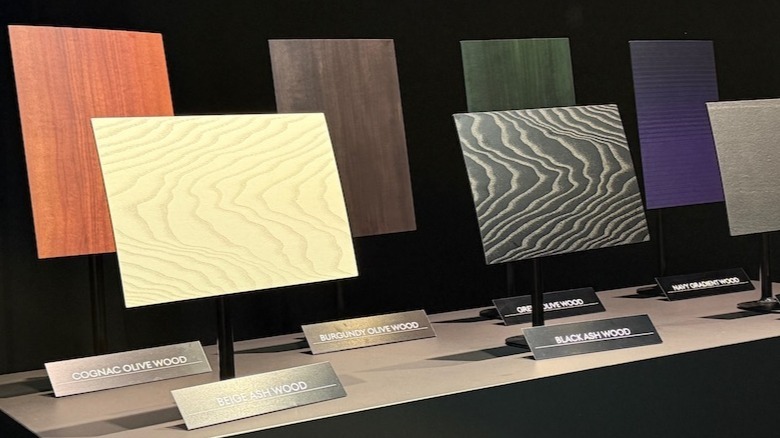
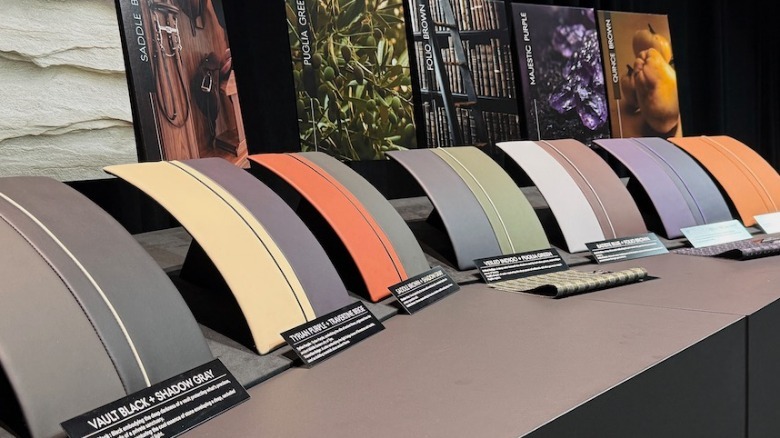
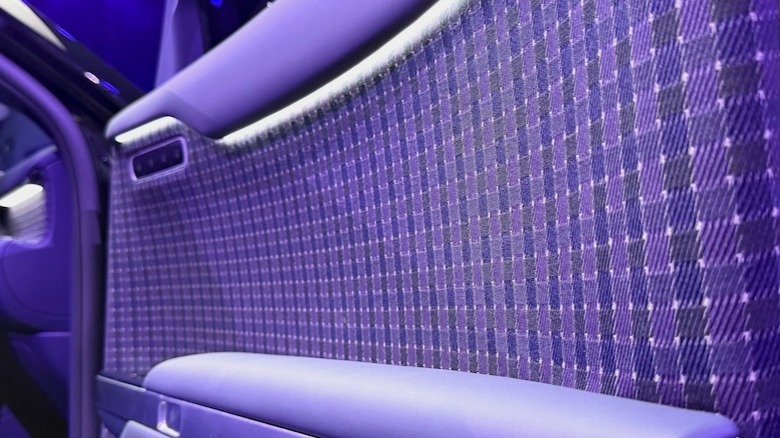
The most interesting of the materials, though, were those on the inside. Various ash woods are available for door panel coverings, as well as olive wood in different colors. A number of different color combinations are available for the leather upholstery, as are a number of checkered (almost Tartan) fabrics, depending on color selection.
A black stone slate, however, tops the list of peculiar panel materials. It’s genuine stone, sourced from Germany, and machined thin enough to be placed on the inside of the GV90, providing a really unique look and feel.
The massive lighting element upfront isn’t cheap
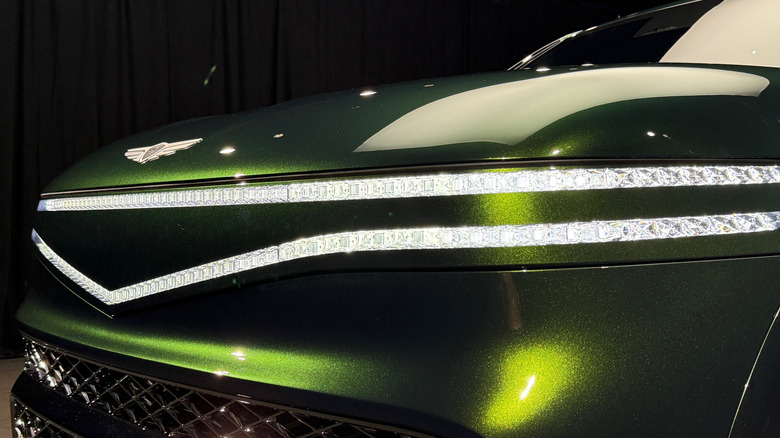
According to the executives at Genesis’ roundtable Q&A session, the GV90 is their most ambitious project to date. And that’s in a world where they’ve raced at the 24 hours of LeMans. The headlights on the GV90 are likely one of the biggest pieces of that ambitious puzzle, and they almost had to abandon the design mid-development cycle. The headlights are so complicated, in fact, that they are “the most expensive lighting element ever created,” according to Genesis representatives.
 Travis Langness/SlashGear
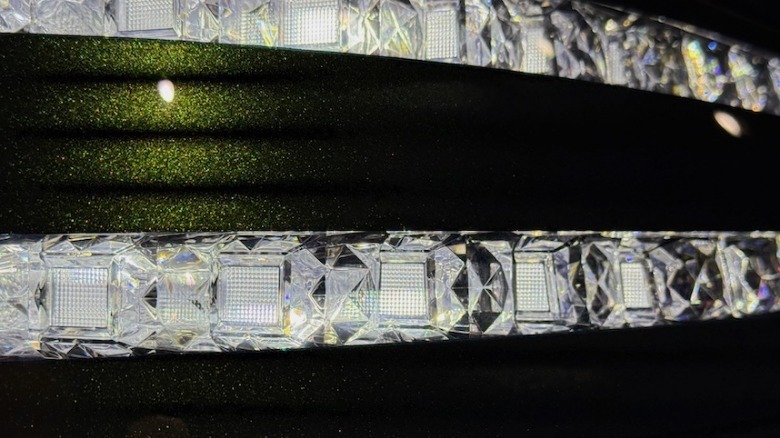
The vehicle-wide headlight display is referred to as the Wing Face Micro Lens Array (or MLA for short), and it’s created using laser-engraving to get the ultra-wide headlights flush with the rest of the bodywork. The lights wrap fully around the front bumper, nearly all the way back to the GV90’s front wheel arches, with a second strip of lights behind the arch for visual continuity.
 Travis Langness/SlashGear
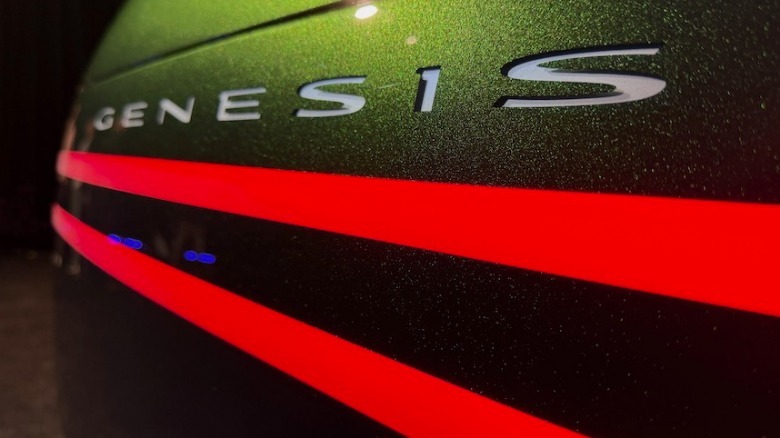
Up close, each lighting element has depth and texture, looking like a hundred little jewels. The taillights, while similarly stretched across the back of the GV90, are smoother, but just as seamlessly integrated into the big SUV’s bodywork. The Genesis logo out back is the same way, flush with the bodywork.
 Travis Langness/SlashGear
There are a lot more details worth mentioning, like the excellent checkered upholstery that’s available, the extremely well-built rear-seat tables, and the fantastic nearly-monobloc wheels, but for that sort of deep dive, I’ll need to drive the new GV90. I’m looking forward to the experience, to say the least.