Findings by Consumer Reports and JD Power suggest that plug-in hybrids are far less reliable than their internal combustion counterparts, but digging into the numbers and research methodology reveals it’s not quite that simple. First, although Consumer Reports’ survey found owners of electric vehicles and plug-in electric vehicles report about 80% more problems on average than owners of internal combustion engine vehicles, it lumped EVs and PHEVs together. Without breaking out the PHEV number, it’s hardly a definitive answer, and it’s further complicated by there being far fewer EV and PHEV models on the market than ICE vehicles, which means a few bad apples can seriously skew the data.
When it comes to assessing reliability, it’s also crucial to consider how the data is sourced. Consumer Reports surveyed owners of about 380,000 vehicles from its own subscriber base, which means most of its data was self-reported. That’s a problem, because it means it’s highly anecdotal. As with online reviews, disgruntled owners tend to be more inclined to respond to surveys than satisfied ones. JD Power’s 2026 reliability report has similar problems, in that it also relies heavily on self-reported information, but it recruits respondents using vehicle registration and ownership information, rather than an existing subscriber base. Additionally, JD Power began collecting repair data from dealerships in April 2026, which will add credibility to subsequent reports.
Some PHEVs are less reliable than others
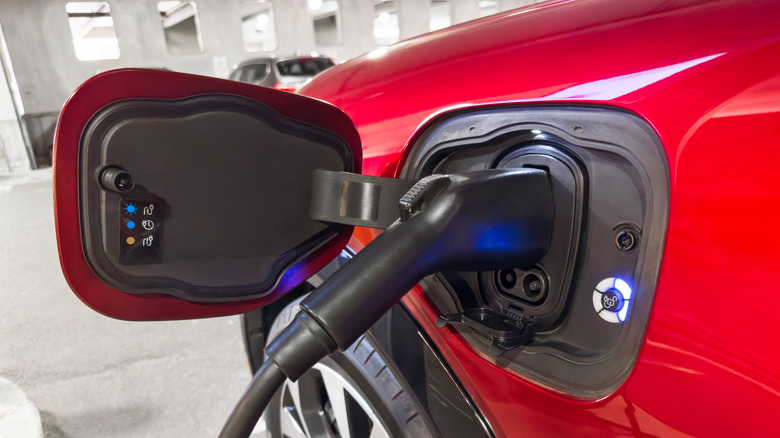
However, regardless of these methodology caveats, both Consumer Reports and JD Power found a significant difference between the reliability (or perceived reliability) of PHEVs and other vehicles. But further digging suggests how well a PHEV performs varies enormously between makes and models, and can also vary substantially by powertrain within the same model family.
For instance, the Mazda CX-90 is available as both a gas-powered inline-six and as a PHEV. We said of the PHEV variant that the mixture of power sources can leave, “the two halves of the drivetrain occasionally feeling like they’re fighting rather than collaborating.” Meanwhile, we scored the ICE variant 9/10 and said, “it’s Mazda’s overall package that leaves its sizable SUV feeling genuinely special.” But don’t just take our word for it, Edmunds was similarly impressed by the gas-powered model, but underwhelmed by its PHEV sibling.
Conversely, Toyota’s Rav4 Prime PHEV consistently bests its ICE stablemate in reviews, with the 2021 model year iteration managing 87/100 on JD Power’s quality and reliability score (and an overall score of 82/100), outperforming other compact SUVs like the Jeep Cherokee and Honda CR-V in the process. Moreover, the SlashGear team has consistently found Toyota’s PHEVs highly reliable, and the RAV4 Prime even made our list of nine of the most reliable SUV models made by Toyota. PHEVs as a category may be less reliable than other powertrain options, but within their ranks, which one you choose makes a huge difference.